



ntroduction
In the demanding environment of aircraft fuel systems, the margin between reliable operation and catastrophic failure often depends on components measured in microns. Among these critical components, silver wire mesh stands as an unsung hero—a precision-engineered material that silently safeguards the heart of the aircraft’s propulsion system. This article explores the technical specifications, working principles, applications, and distinct advantages of silver wire mesh in filtering contaminants and protecting vital components within aircraft fuel systems.
Technical Specifications of Silver Wire Mesh for Aerospace Applications
Mesh Size and Filtration Precision
Silver wire mesh used in aerospace fuel systems is manufactured to exacting specifications that balance filtration efficiency with flow requirements. The mesh size, defined by the number of openings per linear inch, directly determines the screen’s filtration capability .
For aircraft fuel applications, common mesh configurations include:
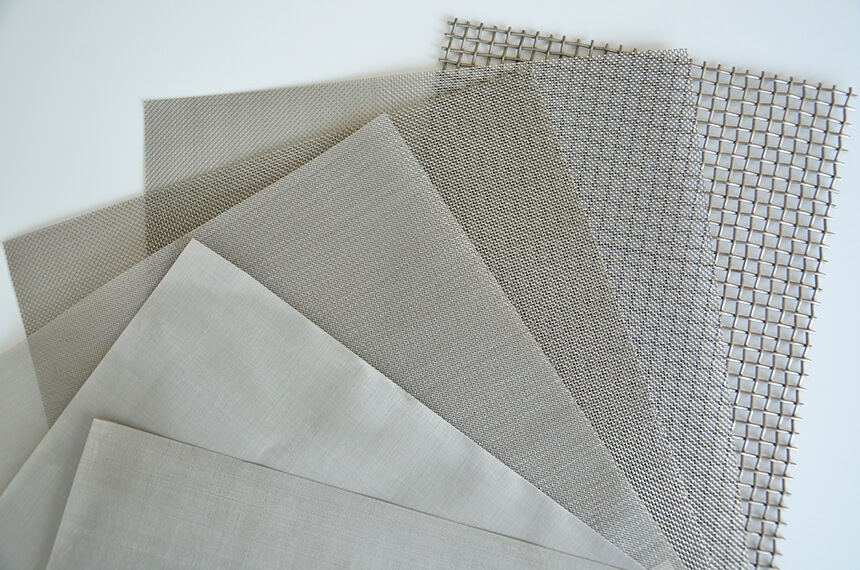
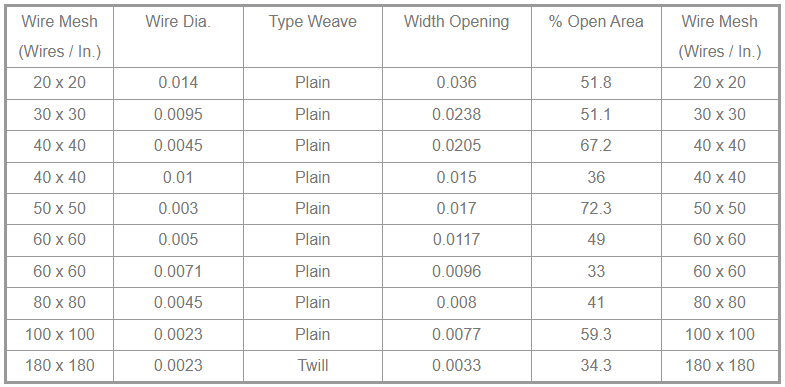
20-40 mesh range: Provides versatile filtration across fine and medium requirements. A 20-mesh screen contains approximately 20 openings per inch with openings around 1.0 mm, while a 40-mesh delivers approximately 40 openings per inch with openings of approximately 0.5 mm.
Higher mesh counts: For precision filtration applications, mesh counts of 60, 80, and up to 100 mesh are available, offering progressively finer filtration capabilities.
Filtration precision: Silver screens can capture particles down to 74 microns at 20 mesh and as fine as 30 microns at 40 mesh, with higher mesh configurations capable of even finer particle retention.
Wire Diameter and Open Area
The physical characteristics of silver wire mesh affect both structural integrity and fluid dynamics:
Wire diameter range: Typically ranges from 0.08 mm to 0.3 mm for standard aerospace applications, though specialized configurations may utilize wires as fine as 0.025 mm .
Open area percentage: This critical parameter varies with mesh configuration. For 20-mesh screens, open area can reach approximately 60%, facilitating high-flow applications. At 40 mesh, the open area typically ranges from 36% to 40%, balancing filtration fineness with acceptable flow rates.
Custom configurations: Manufacturers can produce silver wire mesh with specific wire diameters and open areas tailored to particular aircraft models and fuel system requirements.
Silver Wire Mesh Common Specification:
Material Composition and Purity Standards
The effectiveness of silver wire mesh in aerospace applications depends heavily on material purity:
Purity requirements: Aerospace-grade silver wire mesh typically requires 99.95% to 99.99% pure silver, with strict controls on trace elements such as copper (maximum 0.05%) and phosphorus (maximum 0.002%) .
Quality standards: Silver wires are typically drawn to meet ASTM B298 Grade 1 or 2 standards, ensuring consistent electrical conductivity and minimum silver content .
Weave Patterns and Construction Methods
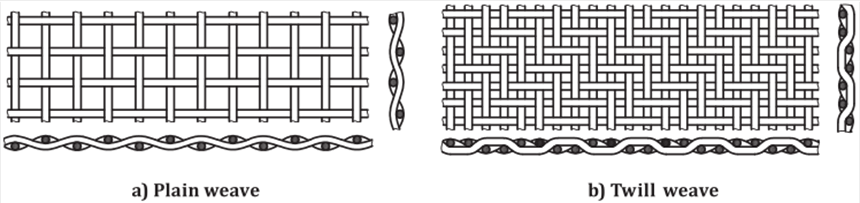
Different weave patterns offer distinct advantages for specific aerospace applications:
| Weave Type | Characteristics | Aerospace Applications |
| Plain Weave | Simple over-one, under-one pattern; most common and economical; uniform mesh openings with good balance of strength and flow | General fuel filtration, laboratory analysis, secondary filtration stages |
| Twill Weave | Diagonal over-two, under-two pattern; superior durability and fatigue resistance; higher load-bearing capacity; reduced wire displacement under stress | High-pressure fuel systems, primary filtration elements, vibration-prone environments |
Working Principles of Silver Wire Mesh Filtration
Surface Filtration Mechanism
The primary filtration mechanism in silver wire mesh is surface filtration. As fuel flows through the precision-woven mesh, particles larger than the mesh openings are physically intercepted and retained on the screen’s surface . This mechanism offers several advantages:
Predictable performance: Particle retention is directly related to mesh opening size, allowing engineers to precisely calibrate filtration levels.
Easy cleaning: Surface-retained contaminants can often be removed during maintenance cycles.
Visual inspection: Accumulated contaminants are visible on the screen surface, facilitating condition assessment.
Depth Filtration in Multi-Layer Configurations
In certain applications, multiple layers of silver mesh or sintered constructions create a depth filtration effect. Contaminants become trapped not only on the surface but also within the tortuous pathways formed by the mesh layers. This approach increases contaminant holding capacity and provides protection against a broader range of particle sizes .
Flow Dynamics and Pressure Considerations
The open area of silver wire mesh directly influences fuel flow characteristics. Engineers must balance filtration fineness with acceptable pressure drop across the filter element. Higher mesh counts (finer filtration) reduce open area and increase pressure drop, requiring careful system integration to maintain proper fuel delivery to engines .
Application Positions and Protected Components in Aircraft Fuel Systems
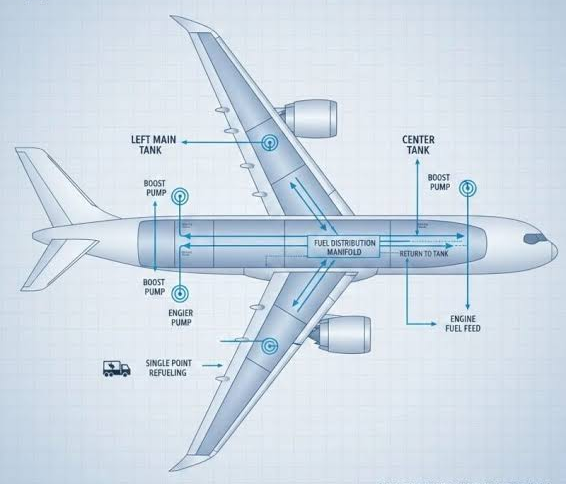
Fuel Tank Outlet and Coarse Filtration
At the fuel tank outlet, silver mesh surrounds collector assemblies to provide initial filtration:
Application: Mesh-enclosed strainers positioned at the lowest points of fuel tanks, ensuring that only filtered fuel enters the supply lines .
Protected components: Fuel boost pumps, low-pressure pumps, and supply lines.
Function: Removes larger contaminants (scale, debris, seal fragments) before they can damage pumps or block smaller passages downstream.
Pressure Line Filtration (Downstream of Pumps)
Following the fuel pumps, higher-pressure lines incorporate silver mesh filters:
Application: Precision filters installed immediately after pump outputs to capture any wear particles generated by the pumps themselves .
Protected components: Fuel metering units, flow control valves, and pressure regulators.
Function: Ensures that only absolutely clean fuel enters the precision-machined components that control engine fuel delivery.
Final Filtration Before Fuel Nozzles
The most critical filtration stage occurs immediately upstream of the fuel nozzles:
Application: High-precision silver mesh elements with fine mesh counts, often in sintered or multi-layer configurations .
Protected components: Fuel nozzles, injectors, and combustion chamber components.
Function: Removes any remaining microscopic particles that could clog the precisely calibrated orifices of fuel nozzles, ensuring proper fuel atomization and combustion efficiency.
Return Line and Recirculation Filtration
Fuel returning from engine-driven pumps and control systems requires filtration before re-entering the tanks:
Application: Silver mesh filters in return lines capture contaminants generated during the fuel’s journey through the engine compartment .
Protected components: Entire fuel system, including tank interiors and all downstream components.
Function: Prevents recirculation of contaminants, maintaining overall system cleanliness and reducing wear on all components.
Core Advantages of Silver Wire Mesh in Aircraft Fuel Systems
Superior Corrosion Resistance
Aircraft fuel systems operate across extreme environmental conditions, from arctic cold to desert heat, with exposure to varying fuel compositions and potential water contamination. Silver’s inherent corrosion resistance provides critical advantages:
Chemical inertness: Silver resists reaction with fuel components, fuel additives, and any water present in the system .
No degradation products: Unlike some materials that might corrode and introduce new contaminants, silver maintains its integrity without producing harmful byproducts .
Long-term stability: Silver mesh filters maintain their structural and filtration properties throughout extended service intervals.
Exceptional Thermal Stability
The temperature extremes encountered in aircraft fuel systems—from cold-soaked fuel at altitude to hot fuel returning from engine-driven components—demand materials that maintain performance across wide temperature ranges:
High-temperature capability: Silver mesh retains its mechanical properties at elevated temperatures, making it suitable for applications near engine heat sources .
Low-temperature ductility: Unlike some materials that become brittle in cold conditions, silver maintains adequate ductility for reliable performance in cold-soaked fuel .
Thermal cycling resistance: Silver mesh withstands repeated temperature excursions without degradation of weave geometry or filtration performance.
Natural Antimicrobial Properties
Microbial contamination in aircraft fuel systems presents a serious operational challenge. Microorganisms can colonize fuel tanks, create sludge, produce corrosive byproducts, and clog filters. Silver’s natural antimicrobial action provides unique advantages:
Microbial growth inhibition: Silver ions actively suppress the growth of bacteria and fungi that can contaminate fuel systems .
Biofilm prevention: By inhibiting microbial attachment and colonization, silver mesh helps prevent the formation of biofilms that can restrict flow and harbor contaminants.
No chemical additives required: Unlike antimicrobial treatments that require fuel additives, silver provides continuous protection without altering fuel chemistry.
Lightweight Construction
Weight reduction remains a perpetual priority in aerospace design. Silver wire mesh contributes to weight optimization:
Favorable strength-to-weight ratio: Precision-drawn silver wires achieve required strength with minimal material mass .
Thin profile construction: Fine wire diameters and optimized weave patterns minimize material usage while maintaining structural integrity.
System-level weight savings: Effective filtration protects downstream components, potentially allowing for lighter component designs elsewhere in the system.
Excellent Conductivity for Static Dissipation
Fuel flow through filters can generate static electricity, creating potential ignition hazards. Silver’s superior electrical conductivity addresses this concern:
Static dissipation: Silver mesh efficiently conducts any generated static charge to ground, preventing dangerous accumulation .
No static buildup: The conductive path through silver mesh ensures that electrostatic charges cannot reach hazardous levels.
Inherent material property: Unlike coatings that might wear or degrade, silver’s conductivity is inherent throughout the material.
Precision Filtration with Consistent Performance
The manufacturing precision achievable with silver wire mesh ensures reliable, repeatable filtration:
Uniform mesh openings: Precision weaving creates consistent aperture sizes across the entire screen surface .
Dimensional stability: Silver mesh maintains its geometry under operating pressures and flow conditions.
Predictable performance: Consistent mesh characteristics allow engineers to accurately model filter performance and system integration.
Compatibility with Advanced Fuel Formulations
As aviation fuel formulations evolve to meet environmental and performance requirements, material compatibility becomes increasingly important:
Broad chemical compatibility: Silver resists reaction with current and anticipated fuel formulations, additives, and contaminants.
Future-proof performance: The inherent stability of silver suggests continued compatibility with evolving fuel technologies.
No catalytic effects: Silver does not catalyze undesirable reactions in fuel that could lead to deposit formation or fuel degradation.
Conclusion
Silver wire mesh represents a critical enabling technology in aircraft fuel systems, providing reliable filtration and component protection across the demanding operational envelope of modern aircraft. From its precision specifications—carefully controlled mesh counts, wire diameters, and weave patterns—to its fundamental working principles of surface and depth filtration, silver mesh delivers consistent performance where failure is not an option.
Positioned strategically throughout fuel systems—from tank outlets to the final approach to fuel nozzles—silver mesh protects pumps, valves, regulators, and injectors from the contaminants that inevitably accompany fuel operations. The unique advantages of silver—corrosion resistance, thermal stability, antimicrobial action, lightweight construction, conductivity, and precision performance—combine to create filtration solutions that enhance aircraft safety, reliability, and operational longevity.
As aerospace technology continues advancing toward higher efficiencies, greater reliability, and more sustainable operations, silver wire mesh will undoubtedly remain an essential component in the sophisticated fuel systems that power the world’s aircraft.
Get Quote
We would like to hear from you. Please get in touch with us by filling out the contact form below, we will get back to you shortly.

Comments are closed.