



Article Summary
Brass Wire Mesh is a versatile woven metal mesh widely used in filtration, EMI/RFI shielding, sieving, architectural decoration, and industrial processing. Manufactured from a copper-zinc alloy, it combines excellent corrosion resistance, wear resistance, attractive golden color, and good formability, making it an ideal alternative to copper or stainless steel in many applications. Whether you are sourcing brass wire mesh for industrial filtration, electronic shielding, or decorative projects, understanding mesh specifications, material composition, and weaving methods will help you select the right product while reducing long-term operating costs.
What Is Brass Wire Mesh?
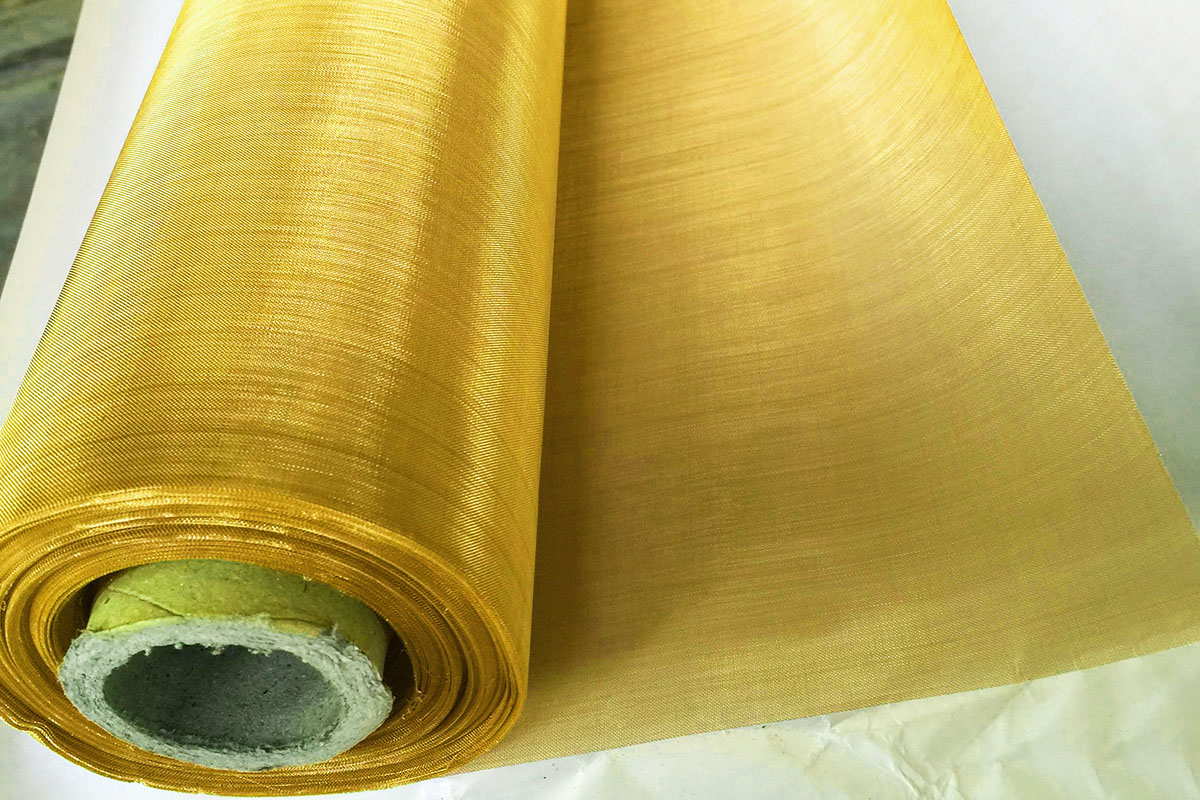
Brass Wire Mesh is a woven metal fabric manufactured by interlacing brass wires in precise patterns using industrial weaving machines. Brass itself is an alloy primarily composed of copper and zinc, combining the corrosion resistance of copper with improved strength and wear resistance provided by zinc.
Compared with many other woven meshes, brass wire mesh offers an attractive balance between mechanical performance, decorative appearance, electrical conductivity, and manufacturing cost.
Depending on the application, brass wire mesh is commonly available in:
- Plain Weave
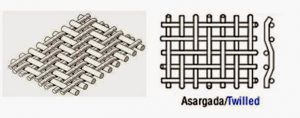
- Twill Weave
Typical specifications include:
- Mesh Count: 6–200 mesh
- Wire Diameter: 0.05–0.70 mm
- Roll Width: 0.6–1.3 m
- Roll Length: 10–100 m
Because brass is relatively easy to process, woven brass mesh can also be fabricated into discs, filters, cylinders, baskets, screens, and customized components for OEM applications.
Common Types of Brass Wire Mesh
Although many buyers simply search for “Brass Wire Mesh,” there are actually two primary brass alloys used in woven mesh manufacturing.
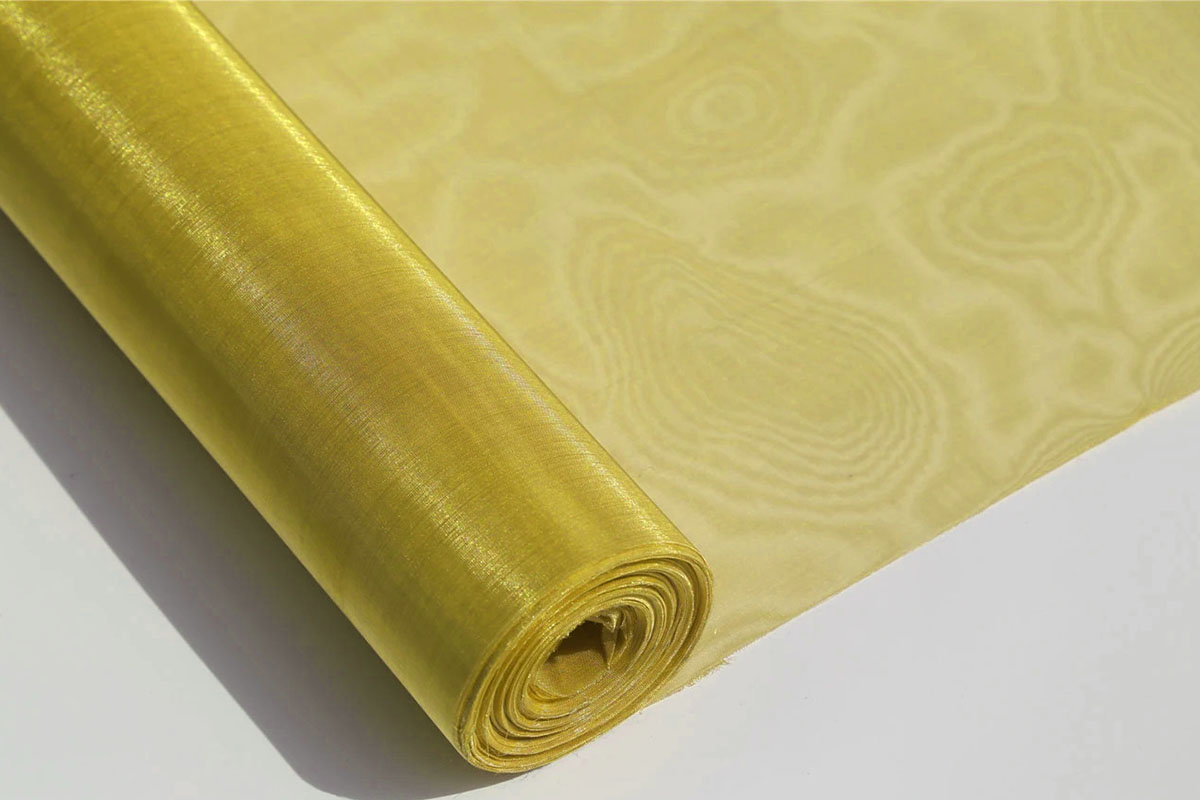
Common Brass Wire Mesh (65% Copper / 35% Zinc)
Common brass contains approximately 65% copper and 35% zinc, offering a balanced combination of strength, corrosion resistance, and affordability.
Its advantages include:
- Excellent wear resistance
- Good corrosion resistance
- Stable mechanical properties
- Competitive material cost
This alloy is widely used in industrial filtration, sieving, and general engineering applications.
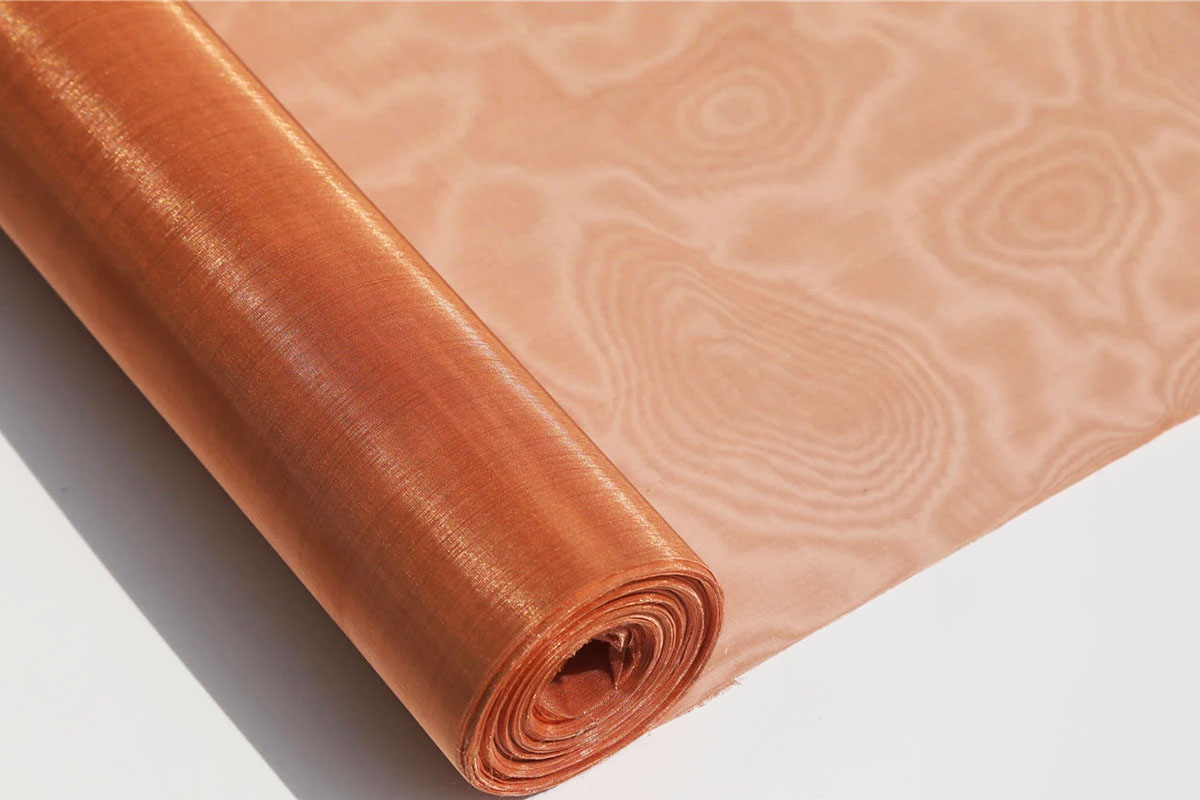
Red Brass Wire Mesh (80% Copper / 20% Zinc)
Red brass contains approximately 80% copper and 20% zinc, giving it a warmer reddish-gold appearance and improved corrosion resistance.
Compared with common brass, red brass offers:
- Higher copper content
- Better atmospheric corrosion resistance
- Improved ductility
- Superior decorative appearance
It is frequently specified for architectural decoration, premium filtration equipment, and specialty industrial applications.
Why Brass Wire Mesh Remains Popular Across Industries
Although stainless steel dominates many industrial sectors, brass wire mesh continues to maintain strong demand because of several unique characteristics.
Attractive Decorative Appearance
The natural golden color of brass immediately distinguishes it from stainless steel and galvanized steel.
Architects and interior designers frequently use brass wire mesh to introduce warmth, texture, and elegance into commercial and residential spaces.
Common decorative applications include:
- Cabinet inserts
- Furniture panels
- Ceiling decoration
- Wall features
- Display cabinets
- Luxury retail interiors
Unlike painted finishes, brass develops a natural patina over time, creating a distinctive appearance appreciated in many architectural projects.
Excellent Corrosion Resistance
Brass naturally resists corrosion in many indoor and moderate outdoor environments.
Compared with ordinary carbon steel, brass provides significantly longer service life without requiring additional protective coatings.
This makes it particularly suitable for:
- Humid environments
- Decorative installations
- Filtration equipment
- Marine-related indoor applications
Good Wear Resistance
Because zinc increases the hardness of the alloy, brass wire mesh offers better wear resistance than pure copper mesh.
This property makes it suitable for applications involving repeated mechanical contact or abrasive particles.
Easy Fabrication
Brass mesh is relatively easy to cut, bend, stamp, and fabricate.
Manufacturers commonly process woven brass mesh into:
- Filter discs
- Cylinders
- Tubes
- Filter cartridges
- EMI shielding components
- Decorative panels
This versatility makes brass wire mesh attractive to OEM manufacturers requiring customized metal components.
Common Applications of Brass Wire Mesh
The unique combination of corrosion resistance, conductivity, and decorative appearance allows brass wire mesh to serve numerous industries.
Industrial Filtration
One of the most common uses of brass wire mesh is industrial filtration.
Typical applications include:
- Liquid filtration
- Gas filtration
- Hydraulic systems
- Chemical processing
- Oil filtration
- Laboratory equipment
The available mesh counts from coarse to ultra-fine allow engineers to select filtration accuracy according to specific process requirements.
EMI and RFI Shielding
Brass wire mesh is widely used for electromagnetic interference (EMI) and radio frequency interference (RFI) shielding.
Because brass is electrically conductive while remaining relatively easy to fabricate, it is commonly incorporated into:
- Electronic equipment
- Shielding cabinets
- Communication devices
- Industrial control systems
- Precision instruments
Proper mesh selection helps reduce electromagnetic interference while maintaining airflow and ventilation.
Sieving and Screening
Manufacturing industries frequently use brass wire mesh for precise screening of powders and granular materials.
Typical materials include:
- Pellets
- Ceramic powder
- Glass particles
- Porcelain clay
- Food ingredients
- Fine chemicals
Different mesh counts provide different particle separation performance, allowing manufacturers to optimize production efficiency.
Architectural Decoration
Beyond industrial applications, brass wire mesh has become increasingly popular in architectural design.
Its elegant metallic texture creates an ideal balance between openness and privacy.
Applications include:
- Decorative partitions
- Window screens
- Cabinet doors
- Furniture decoration
- Display shelving
- Interior feature walls
As lighting changes throughout the day, the woven texture produces rich visual depth and sophisticated shadow effects.
Plain Weave vs. Twill Weave
Selecting the appropriate weaving pattern is essential for achieving the required balance of strength, flexibility, and filtration performance.
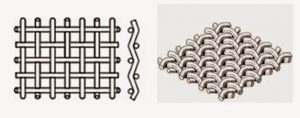
Plain Weave
Plain weave is the most widely used weaving method.
Characteristics include:
- Uniform mesh openings
- Excellent dimensional stability
- High structural strength
- Cost-effective production
It is suitable for most filtration, screening, and decorative applications.
Twill Weave
Twill weave allows thicker wires to be woven into higher mesh counts.
Advantages include:
- Finer filtration
- Greater flexibility
- Higher mesh density
- Improved particle retention
Industries requiring precision filtration often choose twill woven brass mesh.
How to Choose the Right Brass Wire Mesh
Selecting the correct brass wire mesh depends on understanding the requirements of your application.
Before requesting a quotation, buyers should evaluate:
Mesh Count
Higher mesh counts provide finer filtration but reduce airflow.
Lower mesh counts offer greater strength and higher open area.
Wire Diameter
Wire diameter directly influences:
- Mechanical strength
- Filtration accuracy
- Service life
- Open area percentage
Choosing the correct balance is essential for long-term performance.
Recommended Brass Wire Mesh from HIGHTOP
Choosing a reliable supplier is just as important as selecting the right mesh specification. HIGHTOP manufactures high-quality Brass Wire Mesh for industrial, architectural, and OEM applications, offering stable quality, fast delivery, and flexible customization.
Explore our complete product page here:
HIGHTOP supplies woven brass mesh with the following specifications:
- Material: Brass
- Weaving Types: Plain Weave, Twill Weave
- Mesh Count: 6–200 Mesh
- Wire Diameter: 0.05–0.70 mm
- Roll Width: 0.6–1.3 m
- Roll Length: 10–100 m
- MOQ: 1 Roll
- Stock Delivery: As fast as 5 days
Available material grades include:
- Common Brass: 65% Copper / 35% Zinc
- Red Brass: 80% Copper / 20% Zinc
Whether you need standard rolls or customized fabricated components, HIGHTOP can provide solutions based on your technical drawings or application requirements.
Why Choose HIGHTOP?
As an experienced woven wire mesh manufacturer, HIGHTOP supplies customers in filtration, industrial manufacturing, electronics, architecture, and OEM production around the world.
Wide Range of Specifications
Different industries require different combinations of mesh count, wire diameter, and weaving style.
HIGHTOP manufactures brass wire mesh in numerous specifications suitable for:
- Industrial filtration
- Powder screening
- EMI shielding
- Decorative architecture
- Window screens
- Laboratory equipment
- OEM components
This broad product range helps customers source multiple specifications from a single supplier.
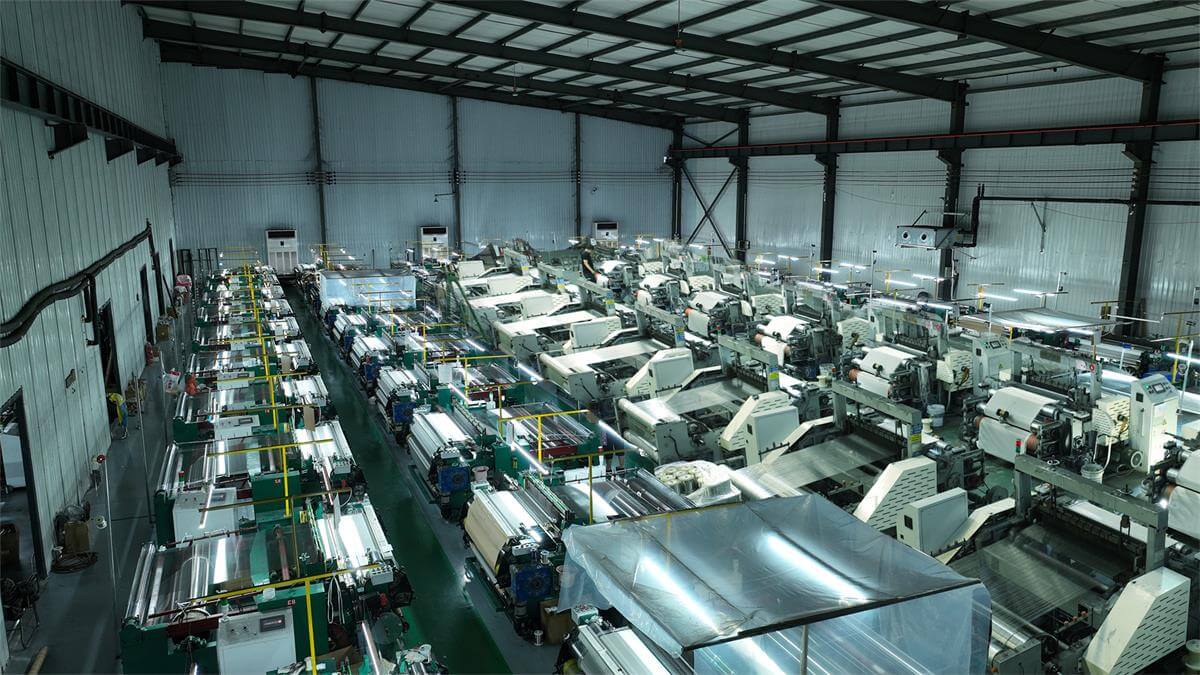
Precision Weaving Technology
Consistent mesh openings are critical for filtration accuracy and product performance.
Our production process ensures:
- Uniform mesh count
- Stable wire diameter
- Accurate weaving
- Excellent flatness
- Reliable dimensional tolerance
These characteristics improve filtration efficiency while simplifying downstream fabrication.
Custom Fabrication Services
In addition to supplying woven mesh rolls, HIGHTOP also provides value-added processing services.
Customized products include:
- Filter discs
- Filter cylinders
- Filter tubes
- Screen panels
- Precision cut parts
- Custom fabricated components
This reduces processing time for OEM manufacturers and industrial equipment producers.
Export Experience and Reliable Packaging
Brass wire mesh is exported worldwide and requires proper packaging to prevent deformation and surface damage during transportation.
HIGHTOP uses professional export packaging, including:
- Inner kraft paper
- Protective plastic wrapping
- Wooden pallets
- Wooden cases
These packaging solutions help ensure products arrive in excellent condition.
How to Select the Right Brass Wire Mesh
Before placing an order, it is helpful to prepare several technical details to ensure accurate product selection and quotation.
Recommended information includes:
- Application (filtration, shielding, decoration, screening, etc.)
- Brass type (Common Brass or Red Brass)
- Mesh count
- Wire diameter
- Roll width
- Roll length
- Quantity
- Fabrication requirements
- Drawings or technical specifications (if available)
Providing complete information allows our engineers to recommend the most suitable mesh while reducing procurement time.
Frequently Asked Questions
What is Brass Wire Mesh used for?
Brass Wire Mesh is widely used for liquid and gas filtration, powder screening, EMI/RFI shielding, laboratory equipment, architectural decoration, window screens, and industrial manufacturing.
What is the difference between brass mesh and copper mesh?
Brass mesh is made from a copper-zinc alloy, offering higher strength and better wear resistance than pure copper mesh. Copper mesh provides higher electrical conductivity, while brass mesh is generally more durable and economical for many industrial applications.
What is the difference between Common Brass and Red Brass?
Common Brass (65% copper, 35% zinc) provides excellent strength, wear resistance, and cost efficiency.
Red Brass (80% copper, 20% zinc) offers improved corrosion resistance, greater ductility, and a richer decorative appearance due to its higher copper content.
Which weave is better: Plain Weave or Twill Weave?
- Plain Weave is suitable for most filtration, screening, and decorative applications because it provides excellent dimensional stability.
- Twill Weave is preferred for higher mesh counts and finer filtration, as it accommodates thicker wires while maintaining precise openings.
The choice depends on your application’s filtration accuracy and mechanical requirements.
Can Brass Wire Mesh be customized?
Yes. HIGHTOP can customize mesh count, wire diameter, roll width, roll length, fabrication, and finished components according to customer drawings or technical specifications.
Why buy Brass Wire Mesh directly from a manufacturer?
Buying directly from the manufacturer offers several advantages:
- Factory-direct pricing
- Consistent product quality
- Flexible customization
- Faster communication
- Technical support
- Stable production capacity
- Reliable international delivery
These benefits are especially valuable for distributors, OEM manufacturers, and long-term industrial buyers.
Get Quote
We would like to hear from you. Please get in touch with us by filling out the contact form below, we will get back to you shortly.

Comments are closed.