



Article Summary
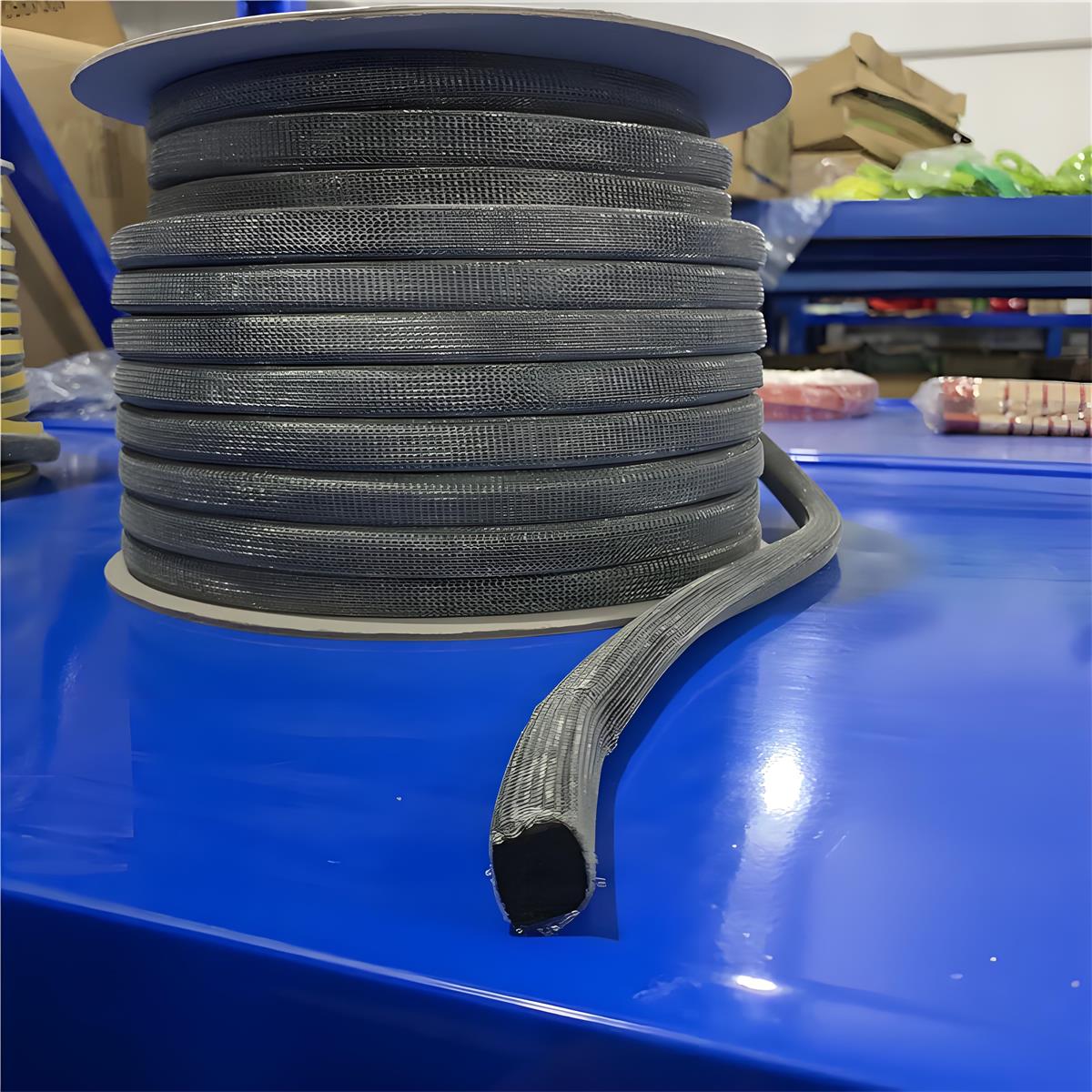
Monel wire mesh is woven from nickel-copper alloy wire and is designed for demanding environments involving seawater, brine, chemicals, heat and mechanical stress. Compared with unalloyed nickel, Monel provides higher strength while retaining useful ductility and corrosion resistance.
HIGHTOP supplies Monel wire mesh in multiple alloy grades, mesh counts, wire diameters and roll sizes. This guide explains its properties, common grades, weaving methods, industrial applications and the specifications buyers should confirm before ordering.
What Is Monel Wire Mesh?
Monel wire mesh is an industrial woven mesh made from a nickel-copper alloy. Nickel is the principal element, while copper and smaller quantities of other elements help determine the performance of each alloy grade.
The material combines strength, toughness and resistance to many corrosive media. It performs particularly well in marine environments and can resist corrosion caused by seawater, flowing water and brine. Certain Monel grades are also used in equipment exposed to alkalis, acids and elevated temperatures.
However, no metal is suitable for every chemical environment. Buyers should provide details about the operating medium, concentration, temperature, pressure and exposure time before selecting a grade.
For available grades and specifications, visit HIGHTOP’s Monel wire mesh product page.
Why Is Monel Wire Mesh Used in Demanding Environments?
Resistance to Marine Corrosion
Monel is widely associated with seawater and marine applications. Its nickel-copper composition provides good resistance to many wet and saline environments, making it useful for filters, strainers and screens installed in marine equipment.
Actual service performance depends on water velocity, aeration, temperature, contamination and the presence of other chemicals. Material compatibility should therefore be evaluated according to the specific operating conditions.
Good Strength and Toughness
Monel has greater mechanical strength than unalloyed nickel without sacrificing practical ductility. The wire can be woven into stable mesh structures that withstand filtration pressure, vibration and repeated handling better than many softer materials.
Its strength makes it suitable for industrial screening and separation applications where both corrosion resistance and structural reliability are important.
Performance Across a Broad Temperature Range
Selected Monel alloys maintain useful mechanical properties under changing temperatures. This makes Monel mesh a potential choice for heating equipment, processing systems and industrial filters exposed to temperature fluctuations.
The correct grade and wire specification should be confirmed whenever the mesh will operate continuously at high temperatures.
Long Service Life in Suitable Conditions
Monel wire mesh usually costs more than conventional stainless steel or carbon steel mesh. Its value comes from its performance in environments where ordinary materials may corrode rapidly and require frequent replacement.
Buyers should compare the total service cost rather than only the initial price. Longer maintenance intervals, fewer shutdowns and reduced replacement frequency may justify the higher material cost.
Common Monel Alloy Grades
HIGHTOP can supply Monel wire mesh using Monel 400, Monel 401, Monel 404, Monel R-405 and Monel K-500. Each grade has different characteristics and should be selected according to the application.
Monel 400
Monel 400 is the most widely recognized grade in this alloy family. It offers a practical combination of strength, ductility and resistance to seawater, brine and various chemical environments.
It is commonly considered for marine filtration, chemical processing, heat exchangers, strainers and oil-industry equipment.
Monel 401 and Monel 404
Monel 401 and Monel 404 are specialized nickel-copper alloy grades. Their compositions are designed for particular manufacturing or performance requirements.
Because they are less commonly requested than Monel 400, buyers should confirm wire availability, minimum production quantity and delivery time before specifying them for a project.
Monel R-405
Monel R-405 is related to Monel 400 but is designed to offer improved machinability. It may be selected when the finished mesh component requires additional fabrication or integration with machined parts.
Its suitability should be evaluated according to the weaving process and final component design.
Monel K-500
Monel K-500 combines the corrosion-resistant characteristics of nickel-copper alloys with higher strength and hardness. It can be considered for demanding marine, oil and gas or mechanical applications.
Because its material and processing costs are higher, K-500 should be selected when the operating conditions require its additional mechanical performance.
Available Specifications
HIGHTOP offers Monel wire mesh in a broad specification range:
| Specification | Available Option |
|---|---|
| Alloy grades | Monel 400, 401, 404, R-405 and K-500 |
| Mesh count | 2–200 mesh |
| Wire diameter | 0.05–1.8 mm |
| Weaving method | Plain weave and twill weave |
| Roll width | 0.1–1.5 m |
| Roll length | 10–100 m |
| Minimum order | One roll |
| Stock delivery | Approximately five days for available material |
Not every mesh count can be combined with every wire diameter. A very fine mesh requires thinner wire, while coarse mesh can use thicker wire. Buyers should confirm the relationship between mesh count, aperture and wire diameter rather than selecting each value separately.
Plain Weave and Twill Weave
Plain Weave
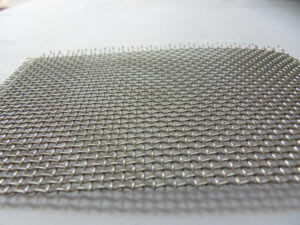
In plain weave, each weft wire passes alternately over and under each warp wire. This creates a straightforward, stable mesh structure with uniform openings.
Plain weave is widely used for general filtration, screening, separation and protective applications. It is normally suitable when the selected mesh count and wire diameter can be woven without excessive deformation.
Twill Weave
In twill weave, each wire passes over and under multiple adjacent wires in an alternating pattern. This structure allows relatively heavier wire to be used for a given mesh count and can provide greater strength in finer meshes.
Twill weave is often selected for demanding filtration or applications requiring a denser and more durable woven structure.
Typical Applications of Monel Wire Mesh
Marine and Offshore Equipment
Monel mesh can be used in seawater strainers, marine filtration systems, intake screens and offshore processing equipment. Its resistance to saline environments helps reduce premature corrosion in appropriately selected applications.
Oil and Gas Processing
The oil and gas industry uses specialty alloy mesh for filtration, demisting, separation and equipment protection. Monel may be considered where operating fluids or environmental conditions are unsuitable for ordinary steel mesh.
Chemical Processing
Monel wire mesh is used in filters, screens and separators exposed to certain acids, alkalis and chemical solutions. Because corrosion behavior varies significantly with concentration and temperature, buyers should provide complete chemical exposure data.
Heating Equipment
Its mechanical stability and temperature performance make Monel mesh suitable for selected heating, heat-treatment and processing equipment. The required mesh structure should be chosen according to temperature, airflow and mechanical load.
Filtration and Separation
From coarse screening to fine filtration, the available 2–200 mesh range supports different particle-retention requirements. The mesh count, aperture, wire diameter and open area must be matched to the target particle size and required flow rate.
How to Select the Right Monel Wire Mesh
Begin by identifying why Monel is required. If the application involves only mild indoor conditions, stainless steel may provide a more economical solution. Monel becomes valuable when nickel-copper alloy performance is needed for marine, chemical or demanding industrial exposure.
Buyers should then confirm:
- Alloy grade
- Operating chemical or liquid
- Concentration and temperature
- Required mesh count or aperture
- Wire diameter
- Plain or twill weave
- Roll width and length
- Required quantity
- Edge treatment
- Test reports or material documentation
- Packaging and delivery requirements
Providing a sample, drawing or previous specification can help HIGHTOP confirm whether the requested combination is technically practical.
Why Choose HIGHTOP?
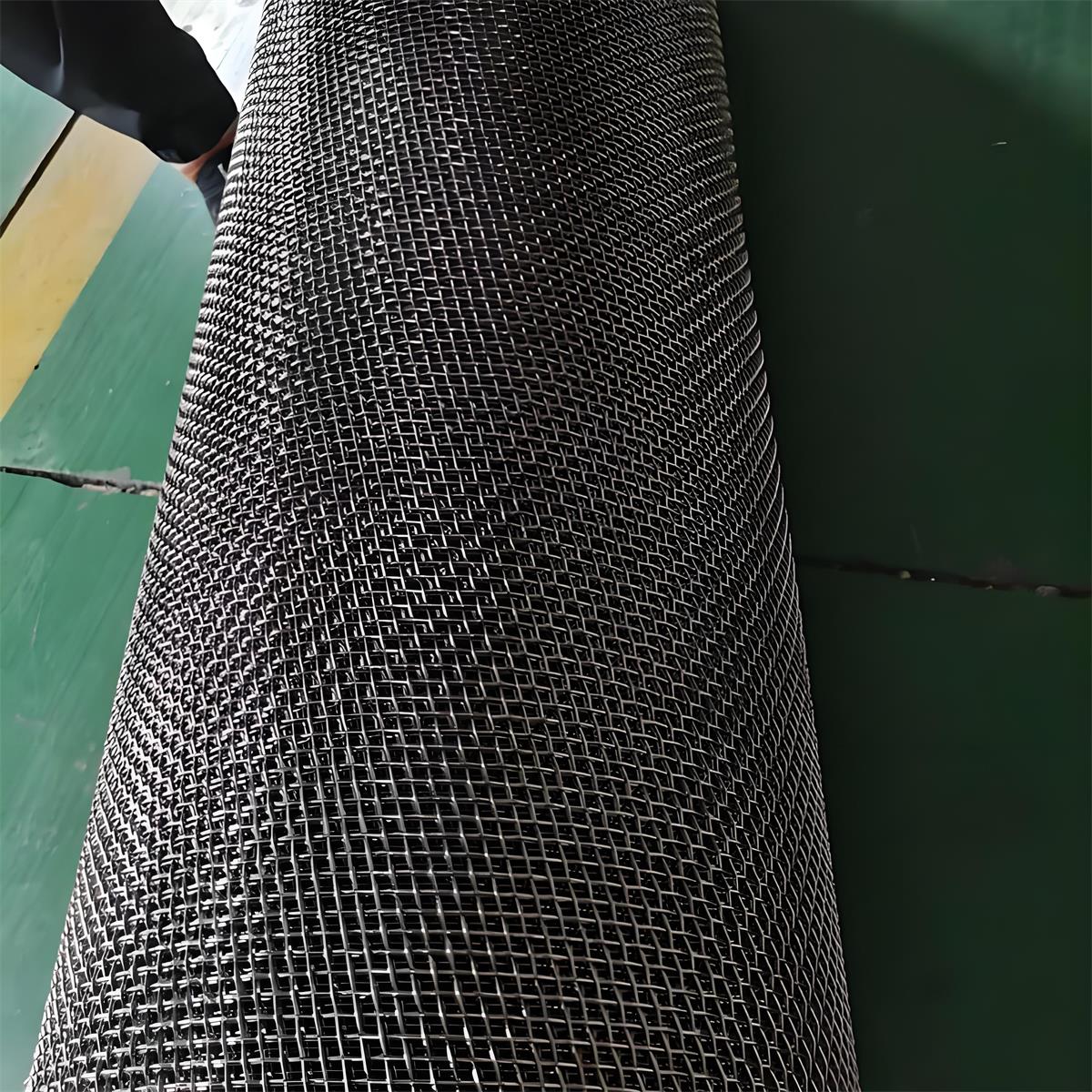
HIGHTOP supplies Monel alloy wire mesh for marine, oil, heating and chemical-processing applications. Available options cover multiple Monel grades, 2–200 mesh, wire diameters from 0.05 to 1.8 mm and roll widths up to 1.5 m.
The minimum order quantity is one roll, allowing customers to purchase material for testing, maintenance or specialized projects. Stock material can be prepared for delivery in approximately five days. Rolls are protected with kraft paper and plastic cloth before being secured on a wooden pallet or packed in a wooden case for export.
Frequently Asked Questions
Is Monel Wire Mesh Better Than Stainless Steel Mesh?
Not in every application. Monel may perform better in certain seawater, brine and chemical environments, while stainless steel is usually more economical for general filtration. Selection depends on the actual operating medium.
What Mesh Counts Are Available?
HIGHTOP offers Monel wire mesh from 2 to 200 mesh. Availability depends on the alloy grade, wire diameter, roll size and required quantity.
Can I Order One Roll?
Yes. The minimum order quantity is one roll, making small-volume orders possible for testing or replacement requirements.
How Quickly Can Stock Material Be Delivered?
Stock material can generally be prepared within approximately five days. Customized specifications or uncommon alloy grades may require a longer production period.
What Information Is Needed for a Quotation?
Provide the Monel grade, mesh count or aperture, wire diameter, weave type, roll dimensions, quantity, application and operating environment.
Conclusion
Monel wire mesh is a specialized solution for filtration, screening and separation in corrosive marine and industrial environments. Selecting the correct alloy grade, mesh count, wire diameter and weaving method is essential to achieving reliable performance.
Send HIGHTOP your technical requirements and operating conditions to receive a suitable specification, availability confirmation and quotation.
Get Quote
We would like to hear from you. Please get in touch with us by filling out the contact form below, we will get back to you shortly.

Comments are closed.